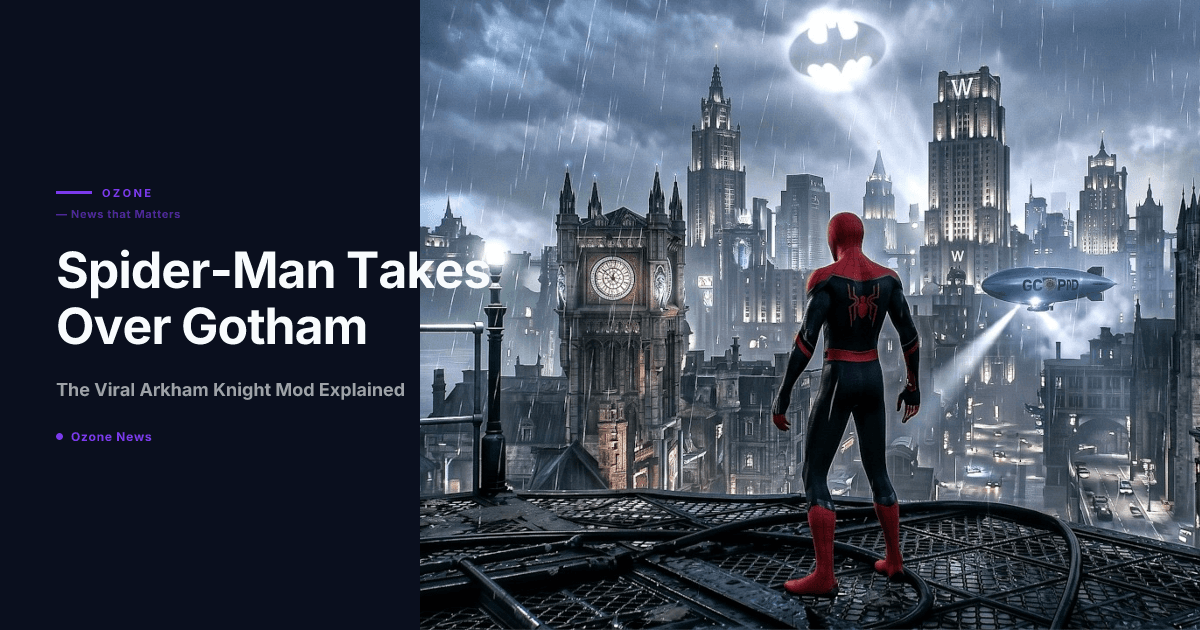
Videos showcasing Peter Parker swinging through the rain-slicked, neon-lit skyscrapers of Gotham City have taken gaming social media by storm. At first glance, seeing Marvel's web-slinger executing FreeFlow combat against Harley Quinn's thugs inside Rocksteady's Batman: Arkham Knight looks like an official, multi-million-dollar crossover.
However, the viral gameplay is not an official release. It is the result of ambitious PC modding. For players wondering how this feat was achieved, and whether downloading it breaks any copyright laws, here is a breakdown of the technical mechanics and legal reality behind the crossover. For more PC gaming coverage, see our Video Games hub.
How it works: mesh swaps, engine bridging and custom scripts
The implementation of Spider-Man into Arkham Knight operates across two distinct technical tiers depending on the specific mod being used.
Tier 1: Standard 3D mesh swapping (the cosmetic route)
The most common version available on platforms like Nexus Mods uses a technique known as mesh swapping.
Because Arkham Knight separates character visual models (meshes) from underlying gameplay physics, modders extract Spider-Man 3D assets and rig them onto Batman's skeletal frame. When you press attack, Spider-Man moves using Batman's martial arts animations. When you use the Line Launcher or Grapple Gun, the game visually reskins the cable into a web strand, creating the illusion of web-swinging while maintaining Batman's underlying collision physics.
Tier 2: Dual-engine inter-process bridging (the advanced ArkWeb project)
The viral clips capturing full, physics-based web-slinging leverage a complex technique: running two game engines simultaneously.
Advanced mods such as the ArkWeb project run Marvel's Spider-Man and Batman: Arkham Knight at the same time in PC background memory. A custom Python and C++ background script scans Gotham City's 3D collision geometry in real time and feeds it directly into Spider-Man's movement engine. The software then renders Spider-Man's exact movement coordinates into Arkham Knight's camera view, giving players real swing physics inside Gotham.
Is it illegal to play?
No, playing this mod in single-player is not illegal, and individual gamers face zero risk of legal action, fines or arrest for downloading and using it. However, the legal landscape surrounding how the mod is created and hosted involves distinct intellectual property boundaries.
| Legal Category | End-User (The Player) | Mod Creators and Hosts |
|---|---|---|
| Criminal Law | 100 percent legal (no laws broken) | 100 percent legal (not a criminal offense) |
| Copyright and IP Law | No risk or liability | Subject to DMCA takedown notices |
| Account Safety | Safe (single-player, no VAC bans) | Not applicable |
| Commercial Sale | Free to use | Strictly illegal if sold for money |
The legal breakdown
- For the player: In single-player games on PC, modifying locally stored game files on your own hardware is legal. Because Batman: Arkham Knight lacks competitive online multiplayer, there are no anti-cheat software triggers or digital rights bans associated with applying character modifications.
- For copyright holders (Disney, Marvel and Warner Bros.): Combining Marvel's trademarked character (Spider-Man) with Warner Bros. Interactive Entertainment's copyrighted game (Batman) without an official license constitutes unauthorized IP usage.
- DMCA takedowns: Rights holders reserve the legal right to issue DMCA (Digital Millennium Copyright Act) removal requests to websites hosting the mod files or YouTube videos displaying them.
- The golden rule of modding: As long as mod creators distribute these files for free and do not monetize Marvel or DC intellectual property behind paid paywalls, corporate legal teams generally limit their response to standard takedown notices rather than full civil lawsuits.
Summary for players
If you own Batman: Arkham Knight on PC, downloading a Spider-Man suit mod or movement script from trusted community repositories is a safe, free way to alter your single-player experience. The worst-case scenario is simply that a download link gets removed by a publisher's copyright request down the road.