LOS ANGELES — For decades, Hollywood has struggled to figure out what to do with the Resident Evil franchise. Previous live-action attempts either leaned too far into ridiculous superhero action or failed to capture the genuine dread of the original source material.
Enter Zach Cregger.
Following the success of his critically acclaimed horror films Barbarian and Weapons, Cregger has completely rebooted the Capcom franchise for Sony Pictures. Released theatrically on September 18, 2026, the new Resident Evil film is not just a massive box office success — it has officially become the highest-rated video game movie in the history of review aggregators Rotten Tomatoes and Metacritic.
By stripping away the convoluted lore and focusing purely on the terrifying vulnerability of the games, Cregger has delivered an absolute survival horror masterpiece. Here is our review.
A Refreshing Change of Perspective
The smartest decision Cregger made was completely abandoning the franchise's traditional action heroes. You won't find Leon S. Kennedy or Claire Redfield doing backflips in this movie.
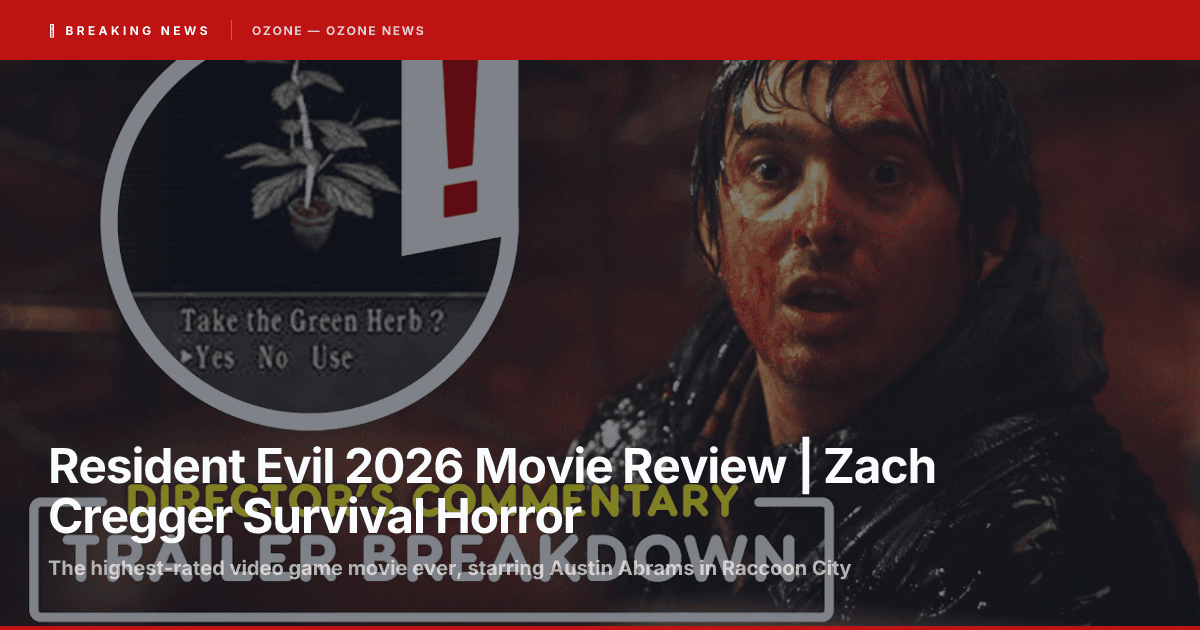
Instead, the film follows Bryan Hodukavich (Austin Abrams), a highly stressed medical courier making a last-minute delivery to Raccoon City General Hospital in the snowy mountains of Colorado. When the T-Virus outbreak hits, Bryan is dragged into the worst night of his life. Abrams is spectacularly charming and relatable in the role; he doesn't have military training or a cool leather jacket. He is just a regular guy who spends 95 minutes stammering, swearing, and sprinting away from well-realized practical-effect monsters.
Critics have accurately noted that watching the film feels like experiencing a real-life “Let's Play”. Cregger perfectly translates the mechanics of playing a survival horror game to the big screen: the claustrophobia, the lack of ammunition, the indestructible barriers, and the terrifying realization that you are completely outmatched.
Balancing the Dread and the Humor
Supported by an excellent cast that includes Paul Walter Hauser, Zach Cherry, and Kali Reis (playing a ruthless Umbrella enforcer), the film manages to balance absolute dread with Cregger's signature dark humor.
However, the director knew exactly when to pull back. In recent interviews, Cregger admitted that he actually cut a significant amount of jokes from the final edit after test audiences found the movie “too funny”. That restraint pays off brilliantly. The humor never undercuts the tension, ensuring that the gruesome monster effects and the claustrophobic hospital setting remain genuinely terrifying from start to finish.
A Divisive, Unforgettable Ending
If there is one aspect of the film that has divided fans, it is the conclusion.
Without diving into major spoilers, Cregger opts for a brutally bleak, uncompromising ending that subverts the traditional Hollywood “survivor” trope. While some purists have pushed back against the grim finale, it undeniably solidifies the film's horrifying stakes and leaves a lasting, shocking impression long after the credits roll.
Ultimately, Resident Evil works because it isn't trying to set up a massive cinematic universe or cram 30 years of video game lore into two hours. It is a tight, terrifying, and wildly entertaining rollercoaster ride that understands exactly what made the games scary in the first place.